Research Overview · Croatian Ethnogenesis
Did the Croats Come From Ancient Iran?
A survey of the evidence, arguments, and sources presented by scholars who believe the origins of the Croatian people trace back to the Iranian plateau — from the Avesta and Persepolis to the steppes of the Black Sea.
Featuring research by Dr. Kaveh Farrokh and others.
For over two centuries, a body of researchers — Croatian, Iranian, Russian, and international — has argued that the people now known as Croats (Croatian: Hrvati) did not originate as Slavs, but descended from an ancient Iranian-speaking people whose name appears as far back as the Achaemenid Empire and the sacred scriptures of Zoroastrianism. Their core claim: the name Hrvat is not Slavic, it is Iranian — and following that name backwards through history leads to the eastern Iranian plateau over 2,500 years ago.
01 · Overview of the Theory
What Is the Iranian Origin Hypothesis?
The hypothesis holds that the ancestral Croats were an Iranian-speaking people — closely related to the Sarmatians, Alans, and Scythians — who originated in the eastern Iranian province known as Harahvaiti or Harauvati (Greek: Arachosia, covering modern southern Afghanistan and parts of Pakistan). Over many centuries, groups bearing this name migrated westward through the Caucasus, across the Pontic-Caspian steppe, and eventually into central and eastern Europe, where they gradually adopted the Slavic language of the surrounding populations but retained their name.
Proponents do not claim that modern Croats are culturally or linguistically Persian. Rather, they argue that an Iranian ethnic core or ruling elite gave its name to a larger mixed population — in the same way that the Bulgars (originally Turkic) gave their name to a people who became Slavic-speaking, or how the Franks (Germanic) gave their name to modern France.
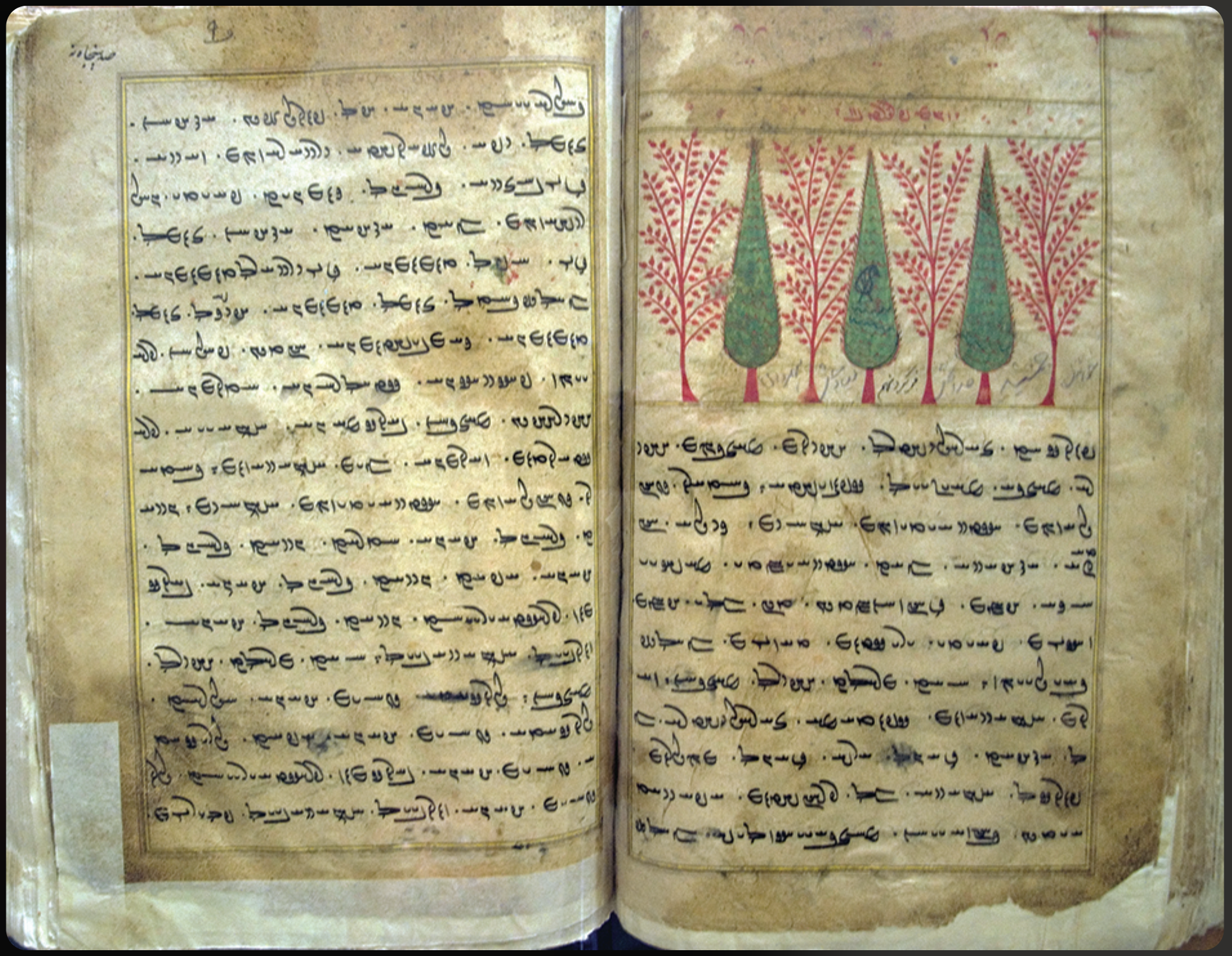
To date, 120 Croatian and non-Croatian university professors and several academics have compiled 249 research works of which many have been printed in various publications, thereby proving that Croats are of Iranian origin.
The journey. The proposed migration path runs: Iranian plateau → Caucasus → Pontic steppe (near Azov/Crimea) → Carpathians → White Croatia (Poland/Ukraine) → Dalmatia (7th century CE).
02 · Primary Source
The Avesta: The Zoroastrian Scripture
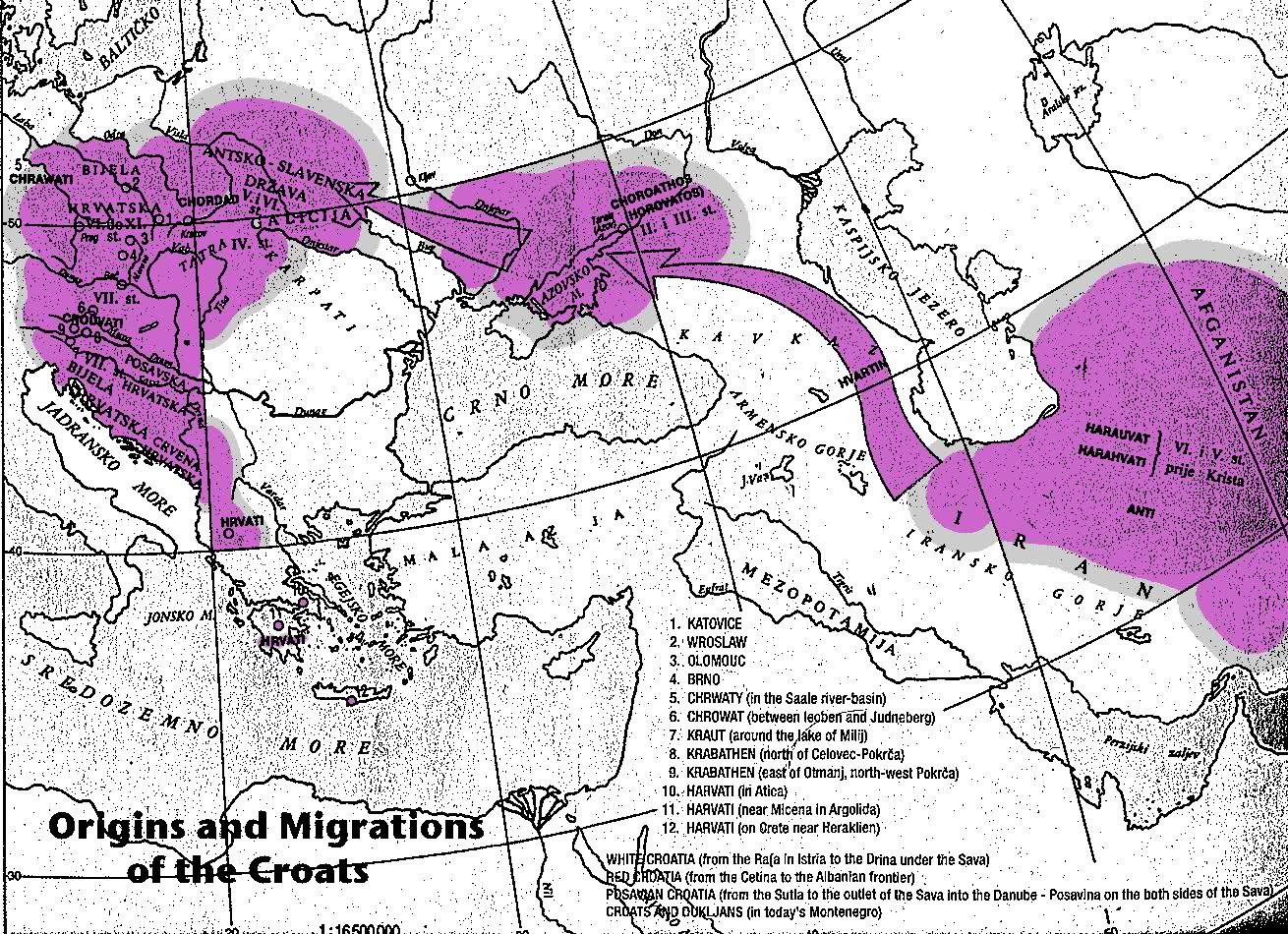
The Avesta is the oldest collection of Zoroastrian religious texts, with its most archaic hymns (the Gathas) potentially dating as far back as 1500–1000 BCE. Its geographical section, the Vendidad (Chapter 1), lists 16 lands created by Ahura Mazda — the sacred homelands of the Aryan (Iranian) peoples. Among these lands is Harahvaiti.
Proponents of the Iranian origin theory argue that Harahvaiti is the earliest known form of the Croatian name. The name derives from the great river of the region — called Sarasvati in the Vedic (Indian) tradition and Harahvaiti in Iranian, referring to the Helmand River system in modern Afghanistan. The people who lived there took the name of the river as their own ethnic designation.
Scholar P.S. Sakač (1937, 1949, 1955) gave what is considered the most detailed philological argument for this connection, tracing the etymology from the Avestan form through Old Persian, Armenian, Greek, and finally Slavic forms of the name.
03 · Archaeological Evidence
Persepolis: The Royal Inscriptions
Persepolis (Pārsa), built from 518 BCE under Darius I, was the ceremonial heart of the Achaemenid Empire. Its stone walls and foundation tablets carry royal inscriptions in three languages: Old Persian, Elamite, and Babylonian. These inscriptions enumerate the subject peoples of the empire — and proponents argue they contain what may be the first direct epigraphic mention of a people identifiable as the proto-Croats.
The DPe Inscription of Darius I (c. 500 BCE). The inscription known as DPe, carved on the southern wall of the Persepolis terrace, contains a list of the peoples Darius ruled. The relevant passage in Old Persian reads:
…Haraiva : Bāxtriš : Suguda : Uvārazmīy : Θataguš : Harauvatiš : Hiduš : Gadāra : Sakā : Maka… (Areia, Bactria, Sogdia, Chorasmia, Sattagydia, Harahvati / Arachosia, Sind / Indus Valley, Gandhara, the Sacae, Maka.)
Croatian scholar Stjepan Krizin Sakač was among the first to formally identify the Harauvatiš in these inscriptions with the proto-Croats. As the Byzantine historian Dvornik recorded: "Sakač thinks that he discovered the name 'Croats' in Darius' inscriptions from the sixth century B.C., where an old Persian province and people are mentioned, called Harahvaitai, Harahvatis, Horohoati."
Proponents also point to the relief carvings on the Apadana staircase, which depict delegations from all provinces of the empire — including the Arachosians — bringing gifts and wearing distinctive dress. Some researchers have noted parallels between the dress of these delegations and traditional Croatian folk costume. Proponents count at least 12 instances of this name across Achaemenid inscriptions (DNa, DPe, DPh, DSf, DB Behistun, XPh and more).
04 · Physical Evidence
The Tanais Tablets: Names Carved in Stone
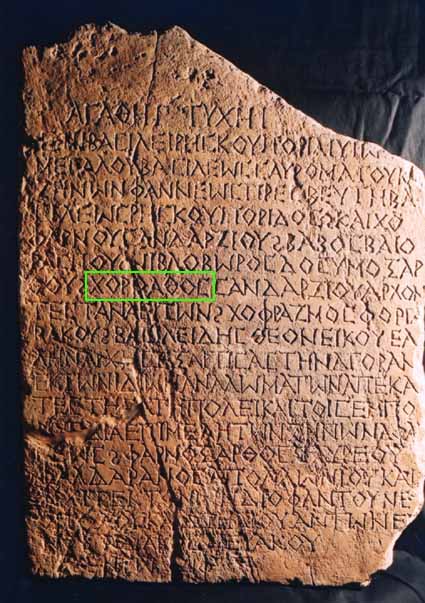
Among the most concrete physical evidence cited by proponents are the Tanais Tablets — two stone public inscriptions discovered by Russian archaeologist Pavel Mikhailovich Leontjev in September 1853, in the ruins of the ancient city of Tanais (near modern Rostov-on-Don, Russia), on the Sea of Azov.
Tanais was, in the 2nd–3rd centuries CE, a cosmopolitan trading city with a mixed population of Greeks, Goths, and Sarmatians. The tablets are civic inscriptions commemorating renovation works. Three names appear in the Greek text: Horoúathos (Χορούαθος), Horoáthos (Χοροάθος), and Horóathos (Χορόαθος). Horoathos appears as "the son of Sandarz" — a recognized Scytho-Sarmatian name — identifying him as an archon (magistrate) of the Tanaisians.
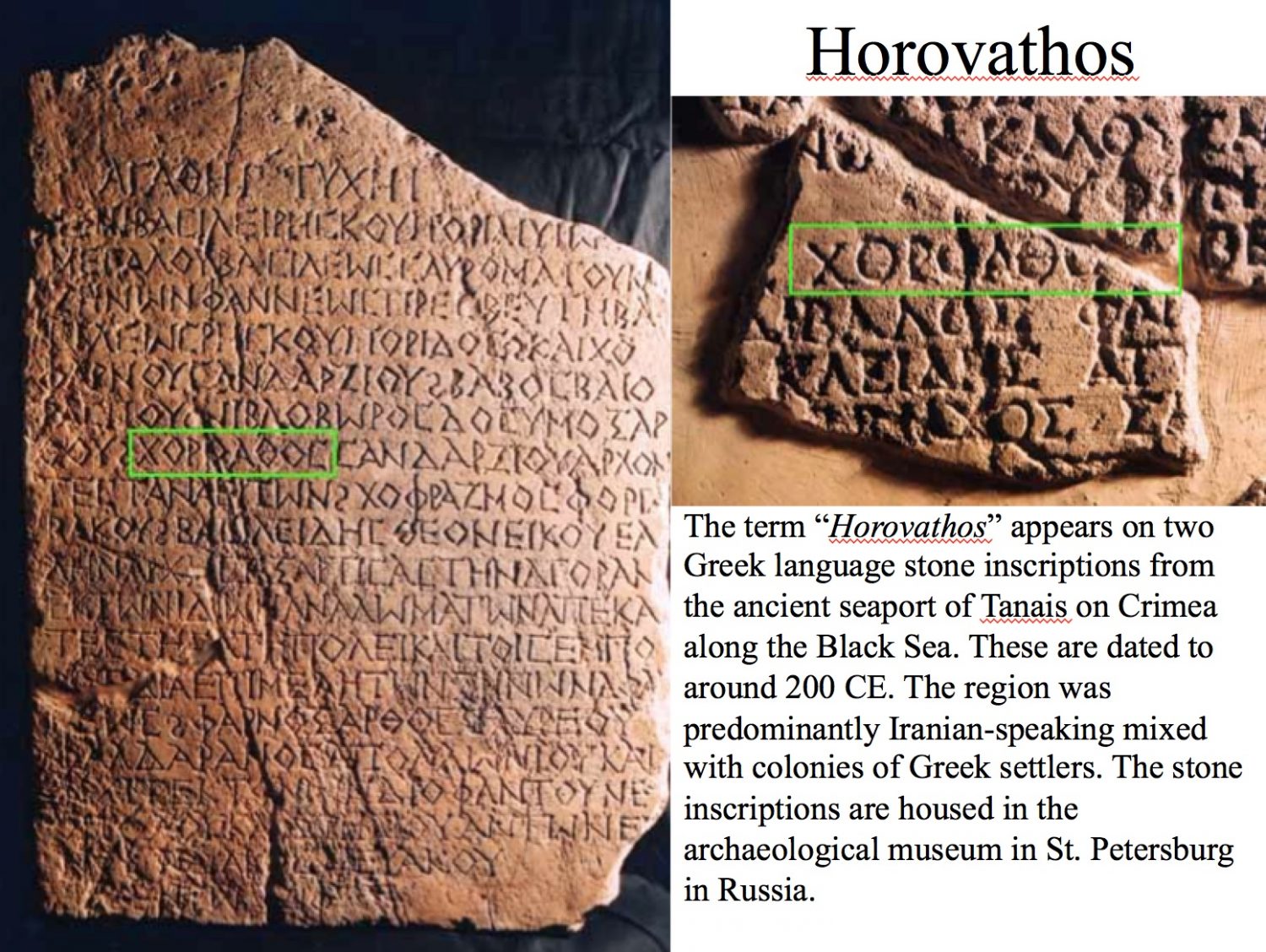
Proponents argue that these three names — found in a Sarmatian community on the Sea of Azov — are the same name as Hrvat, appearing in the region where the proto-Croats were supposedly living before their westward migration. The fact that Horoathos is identified as the son of someone with a Sarmatian name is taken as evidence that these were Sarmatian (Iranian-speaking) individuals, not Slavs.
05 · Ancient Texts
Classical and Medieval Textual Sources
- c. 1370 BCE — Unnamed manuscript, "Hurrvuhe." Cited in Iranian and Croatian academic papers as an early form of the name Hrvati; its precise identity remains discussed.
- c. 77 CE — Pliny the Elder, Naturalis Historia. Cited for mentioning peoples in the Sarmatian region whose names resemble the Croatian ethnonym.
- c. 4th c. CE — Ammianus Marcellinus. Names two cities in ancient Persia called Habroatis and Chroates.
- 418 CE — Orosius, Historiarum Adversum Paganos. Refers to a people called the Horithi or Horites, described as Aryans.
- c. 545 CE — Procopius, History of the Wars. Describes the complex web of Iranian and semi-nomadic peoples around the Black Sea and Sea of Azov.
- 559 CE — Zacharias Rhetor, Historia Ecclesiastica. Names Hrwts in a list of Iranian horse-riding peoples north of the Caucasus — argued to be the Iranian name Hrvati transcribed into Syriac.
- c. 950 CE — Constantine VII, De Administrando Imperio. Mentions the Croats three times, noting they came from White Croatia beyond the Carpathians, invited by Emperor Heraclius (610–641 CE) to fight the Avars.
06 · Linguistic Evidence
The Name Chain: 3,000 Years of Evolution
The central linguistic argument is that the Croatian name Hrvati can be traced through a series of phonetically plausible steps across different languages and time periods. The following chain was proposed primarily by researcher Mato Marcinko (1998 Zagreb Symposium) and draws on earlier work by Max Vasmer, P.S. Sakač, and Fran Ramovš:
Linguist Max Vasmer proposed that the name derives from Old Iranian *hu-urvatha-, meaning "friend" or "ally" — a compound of hu- (good) and urvatha (friend/agreement). This would have been a meaningful tribal name — "the people of good friendship" or "the alliance."
The name Hrvat comes from Hrovat, which comes from the Slavic Horvat, which originates from the Indo-Slavic Harvat, and which is ultimately traced to Persia and the name Harahvaiti.
Wikipedia consensus (as of 2026): "It is generally believed that the Croatian ethnonym — Hrvat, Horvat and Harvat — etymologically is not of Slavic origin, but a borrowing from Iranian languages." This acknowledgment of an Iranian linguistic origin for the ethnonym is now fairly broadly accepted — even by scholars who do not accept the full migration theory.
07 · Migration Narrative
The Proposed Migration Route
Phase 1 — The Iranian Homeland (before ~370 CE). The ancestral Croats are held to have lived in and around the eastern Iranian province of Harahvaiti — the Helmand River basin region — as an Iranian-speaking, semi-nomadic people related to the broader Sarmatian and Alanic confederacies.
Phase 2 — The Sarmatian Steppe (4th c. BCE – 4th c. CE). Groups bearing this name moved westward with the broader Sarmatian migrations, eventually establishing themselves around the Sea of Azov and the lower Don River — where the Tanais Tablets place people with names resembling Horoathos.
Phase 3 — The Hunnic Disruption (~370 CE). Slovenian academic Ljudmil Hauptmann (1935) proposed this as the pivotal moment when Iranian-speaking Croats fled north-westward into Slavic lands beyond the Carpathians, beginning their gradual assimilation into the surrounding Slavic population.
Phase 4 — White Croatia (5th–6th c. CE). Early medieval sources refer to a region called White Croatia in what is today western Ukraine and southeastern Poland. The inhabitants — by now Slavic-speaking — are called Croats.
Phase 5 — Migration to the Balkans (~610–626 CE). Constantine VII Porphyrogenitus records that a group of White Croats crossed the Carpathians and settled in the former Roman provinces of Dalmatia and Pannonia, invited by Byzantine Emperor Heraclius. This is the founding event of the Croatian state as we know it historically, and is not disputed.
08 · Cultural Evidence
Cultural and Material Parallels

The chessboard coat of arms (Šahovnica). Professor Dominik Mandić and others have noted that many Croatian historians consider Croats to be descendants of the Sassanid chess master and minister Bozorgmehr, credited with bringing chess from India to Persia. The argument is that the Croats adopted the chessboard as a symbolic memory of their Iranian past.
Ancient Croatian folk art bears eastern and Iranian traces, particularly the Croatian "troplets". The Croats also brought over from Iran their national coat of arms with its 64 red and white checkers.
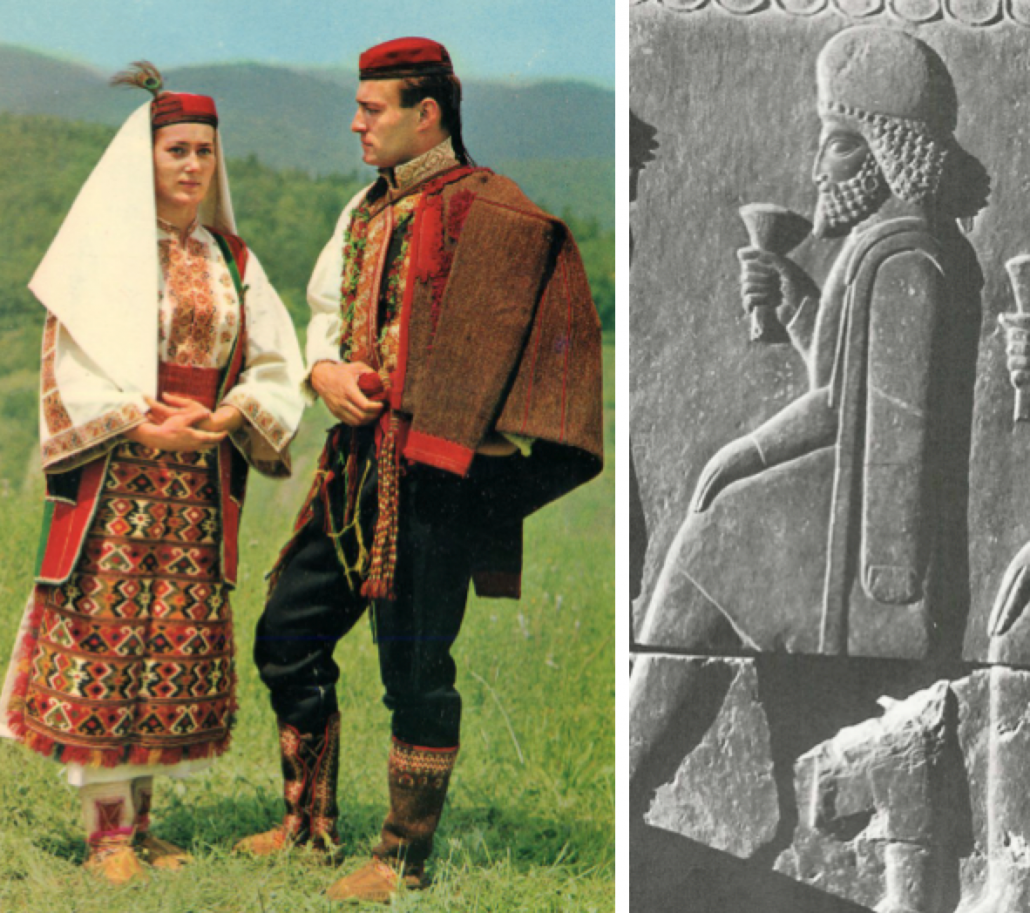
Textile and embroidery. Dr. Kaveh Farrokh (University of British Columbia) has written about striking parallels between traditional Croatian folk embroidery and the textile traditions of tribal peoples in Iran — specifically the Kurds and the Lurs. The front-panel design of traditional Croatian skirts finds close parallels among the Kurds of Khorasan in northeastern Iran.
Peacock symbolism. Peacock feathers in traditional Croatian ceremonial caps have been linked by some researchers to the peacock's sacred status in ancient Iranian mythology, particularly among the Yezidi Kurds (who revere the Peacock Angel Melek Taus).
Genetic evidence. Proponents cite studies claiming that approximately 75% of Croats carry a genetic marker called "EU 7" that is more commonly found among Iranian-speaking peoples — such as Kurds and Armenians — than among other Slavic populations.
Language and music. Croatian ethnomusicologist Krešimir Galin has claimed connections through musical traditions, folk instruments, and vocabulary. Mato Marcinko's 1998 Zagreb paper traced the journey of a people "from their Indian homeland to Persia, to Caucasus and finally up to the Adriatic."
09 · Research Community
Scholars Who Have Advanced This Theory
The Iranian origin hypothesis has a substantial body of academic literature behind it, though it remains a minority position relative to the mainstream Slavic-migration model. Notably, some of this research was suppressed under the Yugoslav regime, and at least four researchers are alleged to have been killed by the Yugoslav secret police for pursuing this line of inquiry.
| Scholar | Nationality | Dates | Contribution |
|---|---|---|---|
| Konstantin Josef Jireček | Czech/Austrian | 1911 | First major scholar to formally propose Iranian origin |
| A.I. Sobolevski | Russian | 1921 | First systematic theory of Iranian origin; linguistic groundwork |
| Fran Ramovš | Slovenian | 1921 | Reached Iranian origin conclusion via Max Vasmer's philology |
| Max Vasmer | German/Russian | 1920s | Proposed derivation from Old Iranian *hu-urvatha |
| Stjepan Krizin Sakač | Croatian | 1937, 1949, 1955 | Most detailed philological argument; Darius I inscriptions |
| Dominik Mandić | Croatian | 1960s–70s | Connected chessboard coat of arms to Iranian tradition |
| Ljubomir Hauptmann | Slovenian | 1935 | Proposed Hunnic disruption as the trigger for westward migration |
| Radoslav Katičić | Croatian | 1990s–2000s | Accepted Iranian origin of the ethnonym; Tanais tablets |
| Kaveh Farrokh | Iranian-Canadian (UBC) | 2000s–present | Comparative cultural, textile, and historical analysis |
| Krešimir Galin | Croatian | 2000s–present | Ethnomusicological and symbolic connections |
| Mato Marcinko | Croatian | 1998 | Linguistic journey from Sanskrit Sarasvati to modern Hrvati |
10 · The Debate
Strengths, Weaknesses and Competing Views
Arguments Supporting the Theory
- The ethnonym Hrvati is almost universally accepted as non-Slavic and Iranian in origin.
- The phonological chain from Harahvaiti to Hrvati is linguistically coherent.
- The Tanais Tablets provide concrete physical evidence of people named Horoathos in a Sarmatian context.
- Achaemenid inscriptions mention Harauvatiš at least 12 times.
- Genetic data (EU 7 marker) aligns more with Iranian-region populations than typical Slavic peoples.
- Cross-cultural parallels in embroidery, symbolism, and material culture are documented.
- Over 120 academics have published 249 research works supporting the hypothesis.
- Yugoslav-era suppression of this research is well-documented.
Arguments Against or Questioning
- Croatian language is unambiguously Slavic — requires explaining a complete language shift.
- No Croatian folklore, toponyms, or oral traditions show clear Iranian content.
- The phonological chain involves many speculative intermediate steps.
- The Tanais connection lacks confirmatory evidence beyond name similarity.
- Mainstream archaeology supports a Slavic migration model with no Iranian elite layer.
- Cultural parallels could arise independently or through trade contact.
- The genetic evidence is disputed; "EU 7" attribution is not universally accepted.
- Some sources cited (e.g., the 1370 BCE manuscript) are difficult to verify independently.
The Scholarly Synthesis
The most widely held nuanced position among historians today is that:
- The name Hrvati is Iranian in origin — the least contested part of the theory.
- There were likely some Iranian (Sarmatian/Alanic) elements in the ancestral Croatian tribal elite, who gave their name to a larger mixed population.
- The language and cultural identity of the Croats is Slavic, and has been for as long as we have written records of them.
- The full "Croats came from Iran" narrative as a total origin story remains unproven by current evidence but is not impossible.
The remote Irano–Sarmatian elements or influences on the Croatian ethnogenesis cannot be entirely excluded.
Video: The Croatian Language and Its Connections to Iran
A short video on the Croatian language and its links to Iran — a complement to this article.
Sources and Further Reading
- Dr. Kaveh Farrokh — "Croatians and Ancient Iran" (kavehfarrokh.com)
- Samar Abbas — "Common Origin of Croats, Serbs and Jats" (Foreign Policy Truth)
- Wikipedia — "Origin Hypotheses of the Croats"
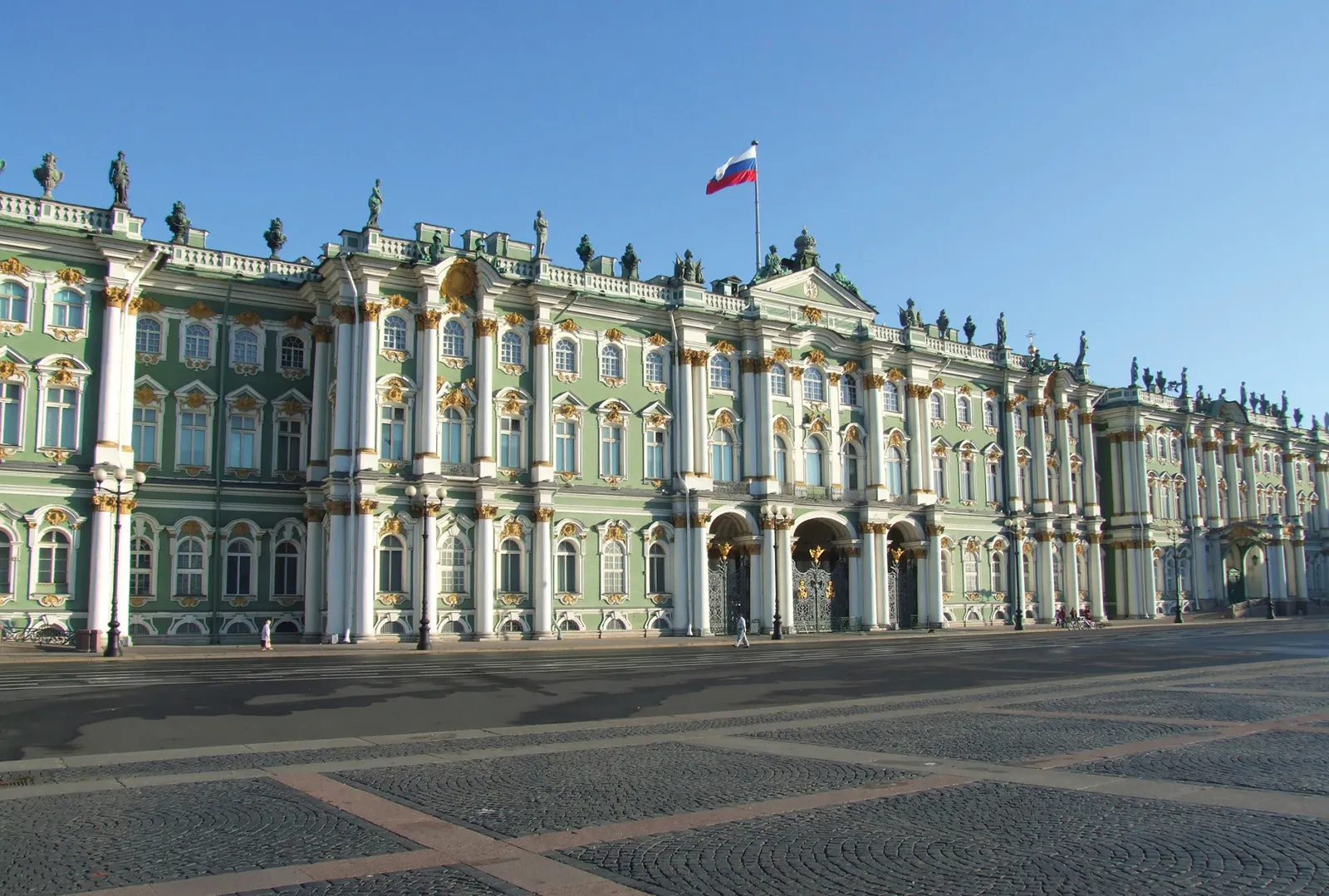
- Wikipedia — "Tanais Tablets" / Hermitage Museum, St. Petersburg
- Wikipedia — "White Croats"
- Bharath Gyan Blog — "India–Croatia–Sarasvati Connect"
- Tehran Times — "Croats and Ancient Iran: Symposium Coverage" (1998–2003)
- Zacharias Rhetor, Historia Ecclesiastica, c. 559 CE
- Constantine VII Porphyrogenitus, De Administrando Imperio, c. 950 CE
- Persepolis DPe Inscription of Darius I, c. 500 BCE (Livius.org)
- Sutra Journal — "Sanskrit in Croatia: From Sarasvati to Hrvati"
All images sourced from Wikimedia Commons under public domain or Creative Commons licences. This article is produced for research and educational purposes and presents the evidence as argued by proponents of the Iranian origin hypothesis. It does not constitute an endorsement of any particular historical claim.